- Project Information
- Completion Photos
- Visualizations
- Drawings
- Video/Animation
Aero Academy Training Institute (AATI)
- Client: Rochell Roache
- Location: Industrial Estate, Vieux-Fort, Saint Lucia
- Project Type: Institutional
- Scope of Work: Design
- Project Status: Proposed
- Project Timeline: 2025
- Project Team: Ar. Shuzaul Islam
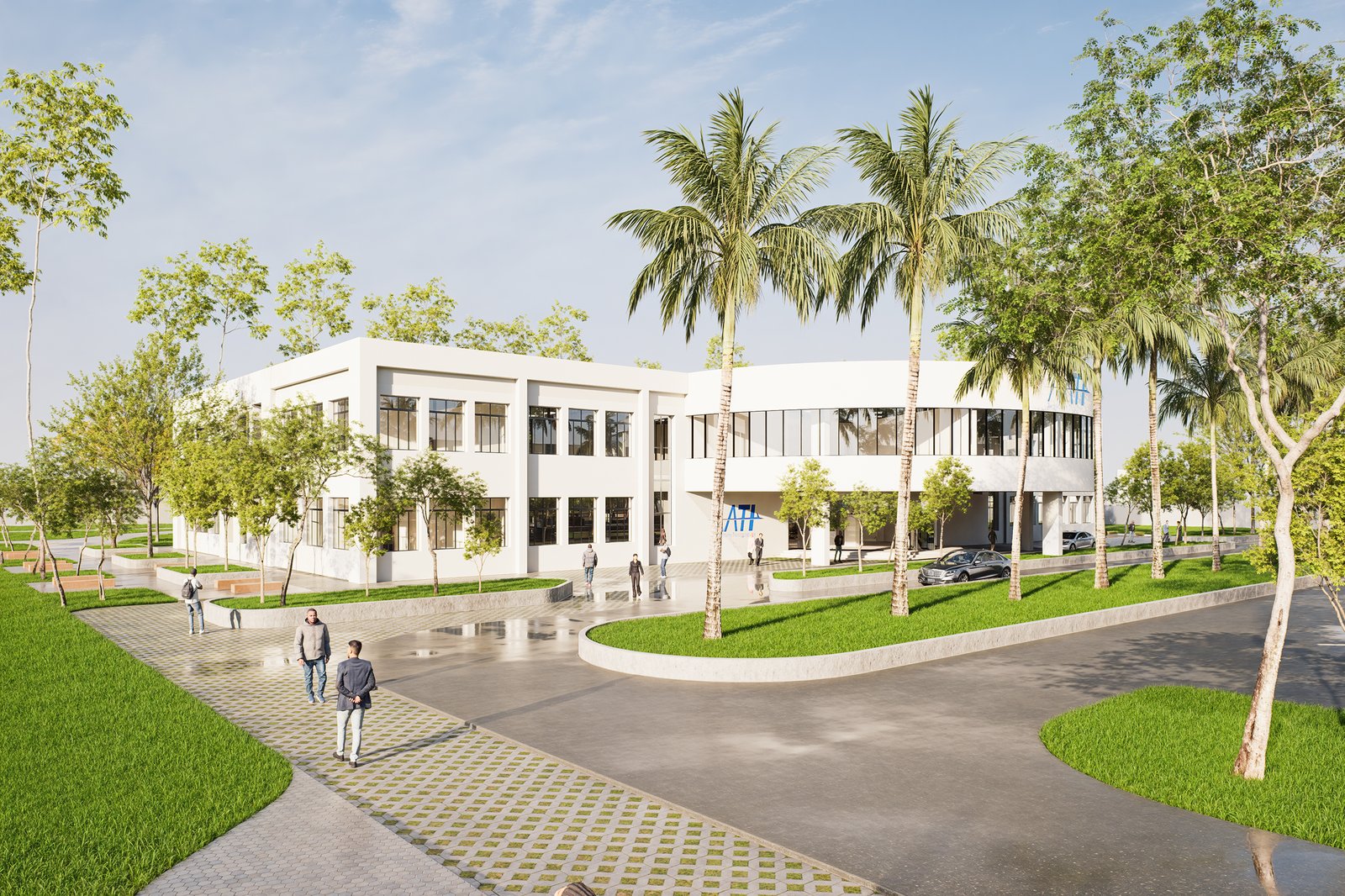
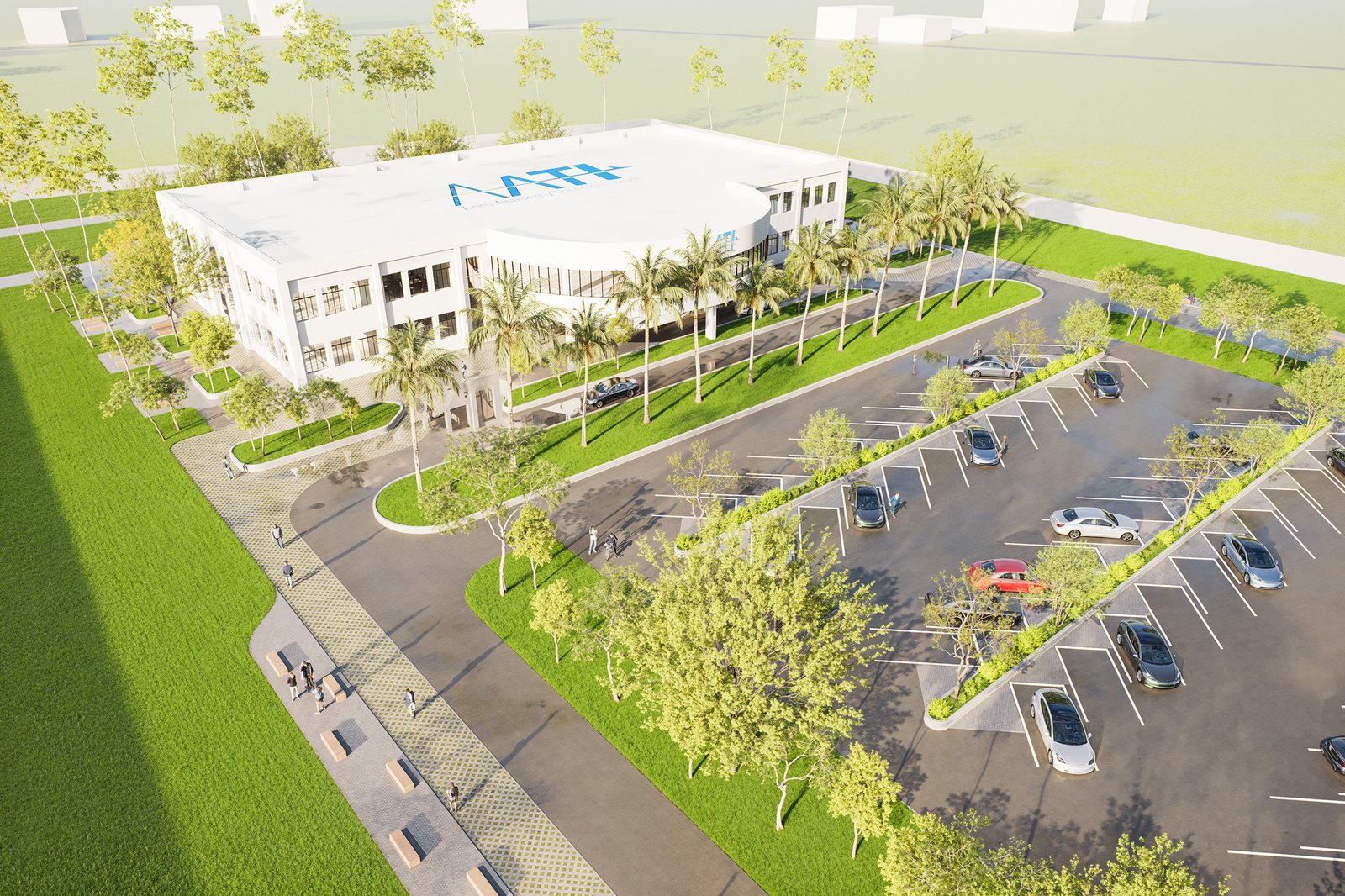
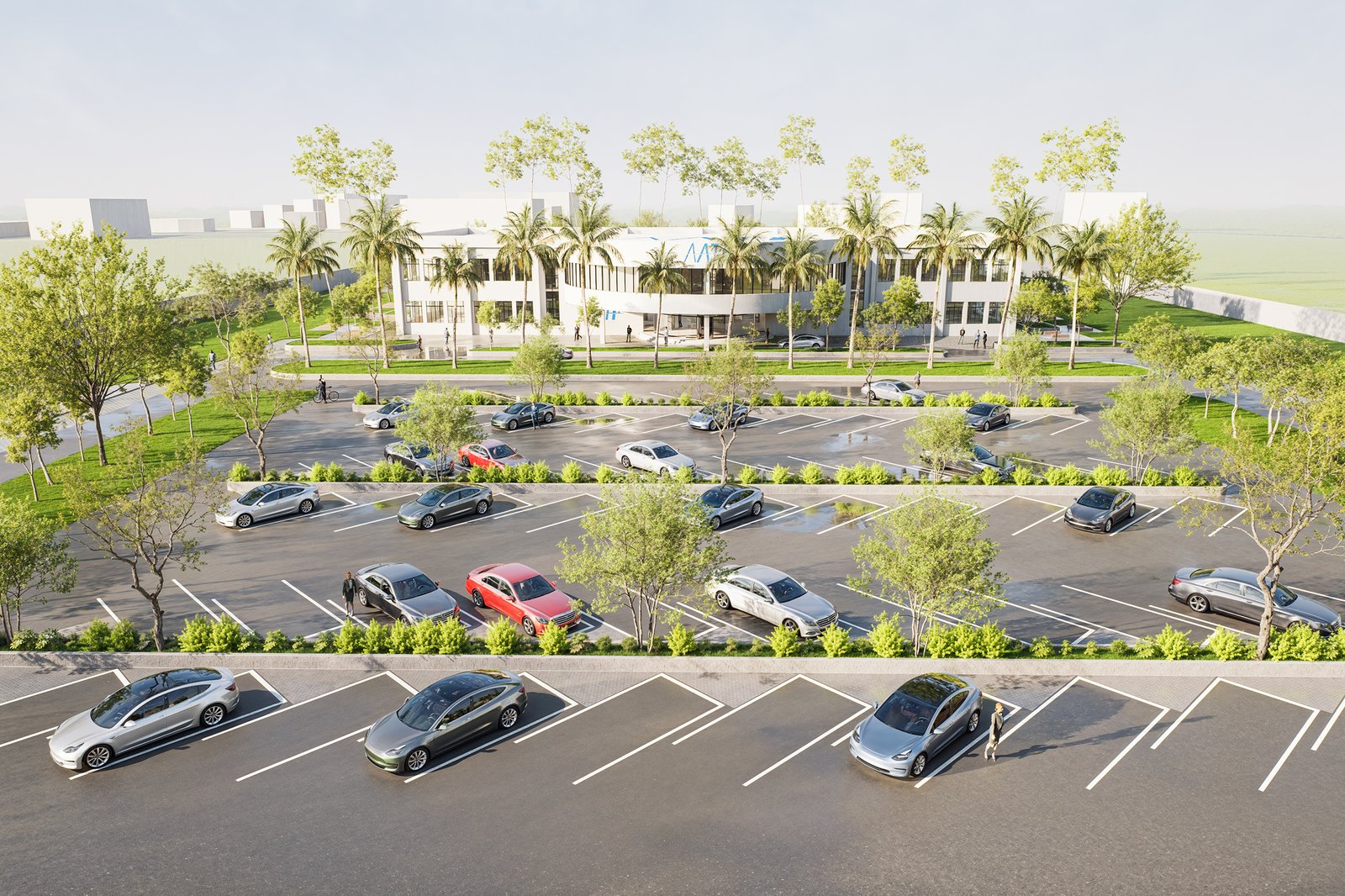
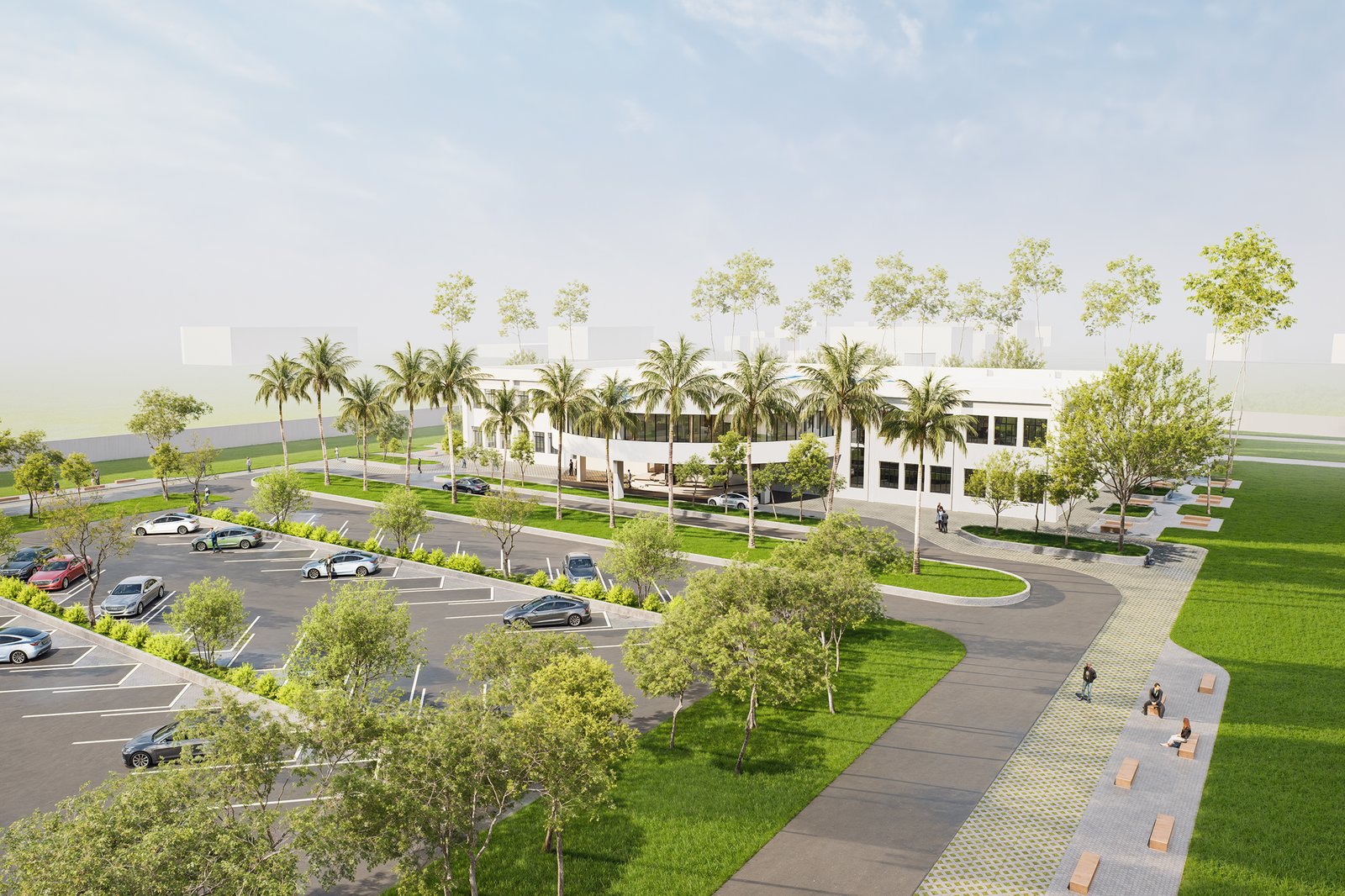
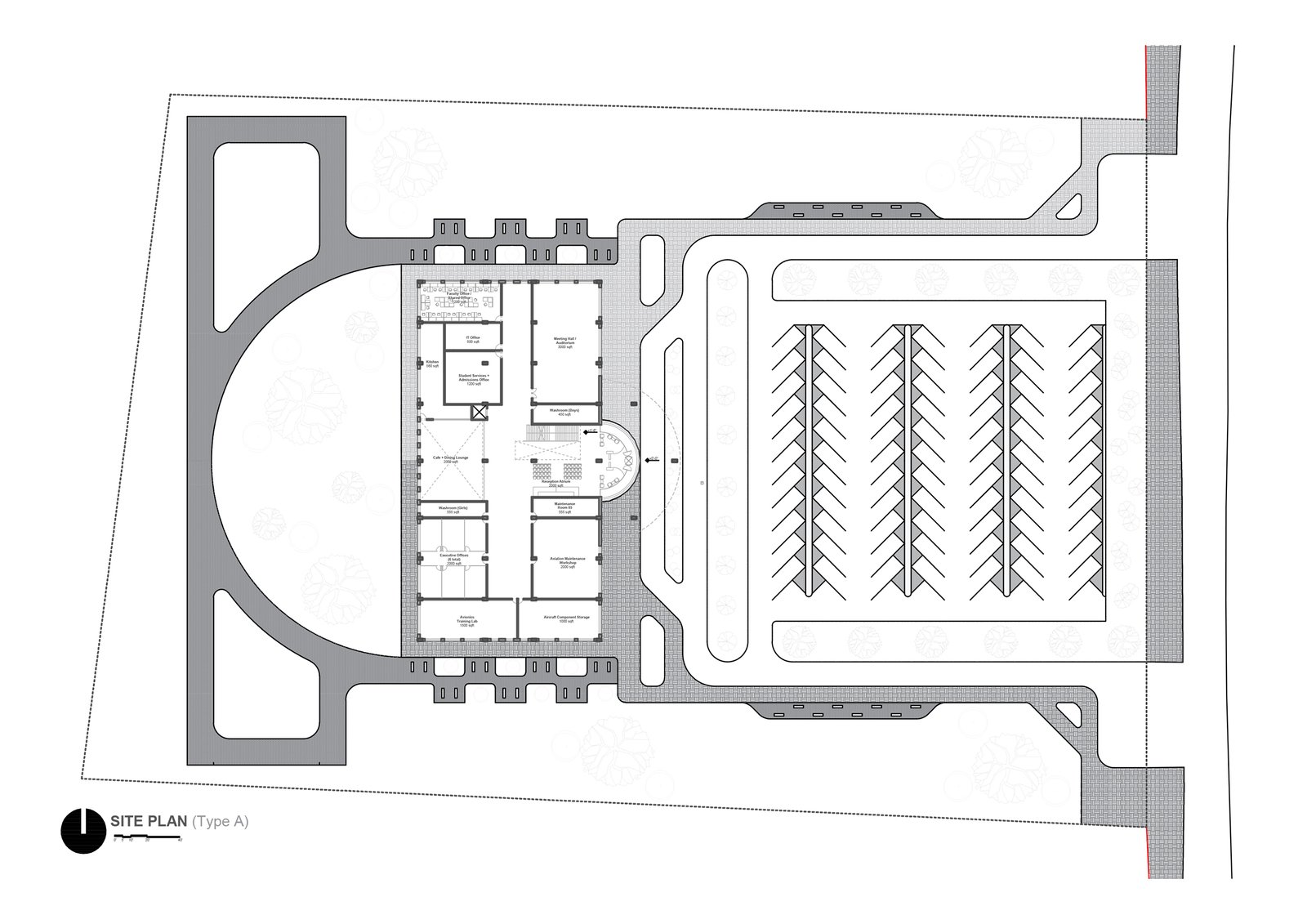
The Aero Academy Training Institute (AATI) is envisioned as a purpose-built, two-storey aviation education and training facility that combines advanced simulation technology, academic learning, and community engagement within a cohesive architectural identity. Designed on a landscaped campus setting, the approximately 40,000 sq. ft. institute reflects precision, clarity, and professionalism—values central to the aviation industry.
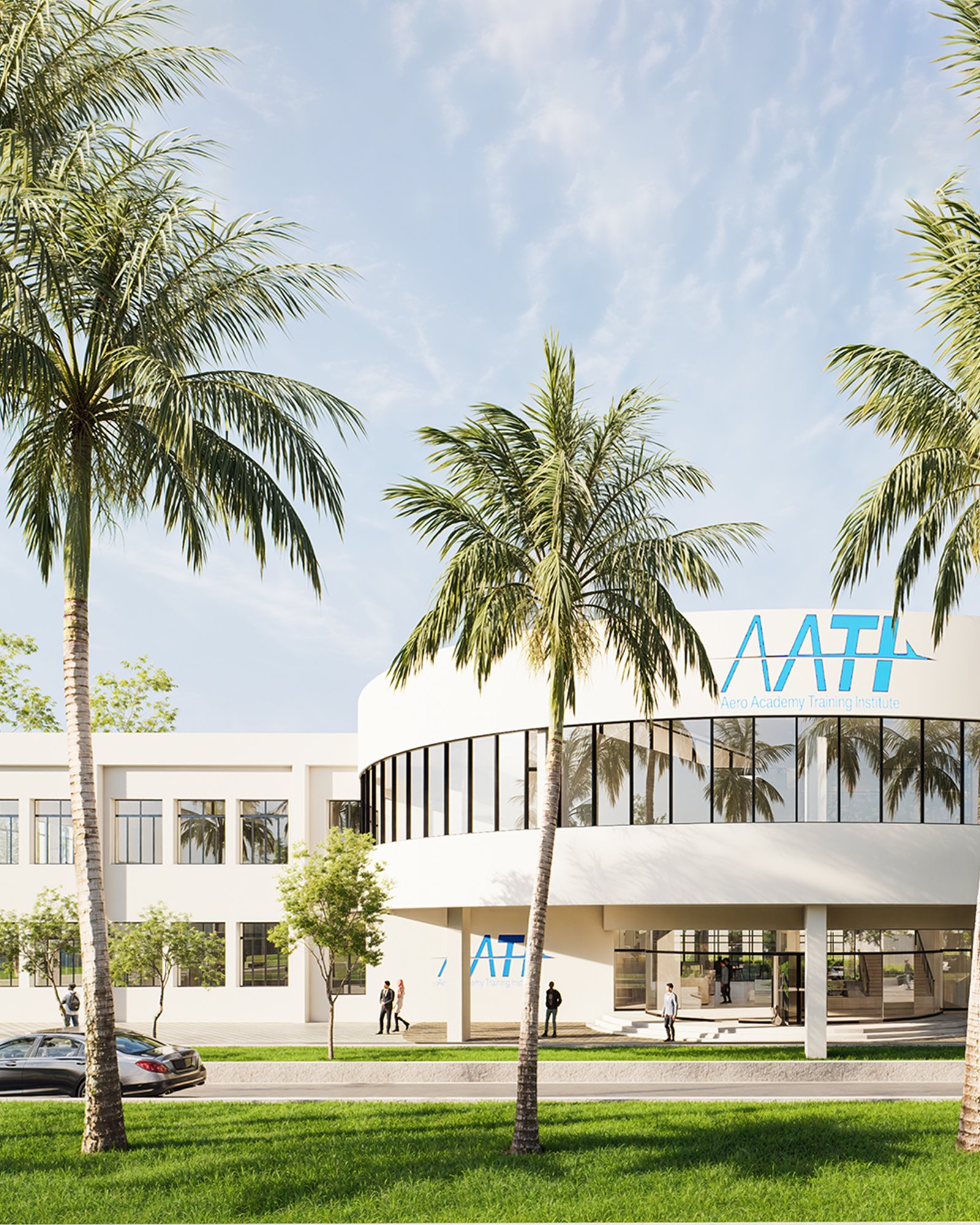
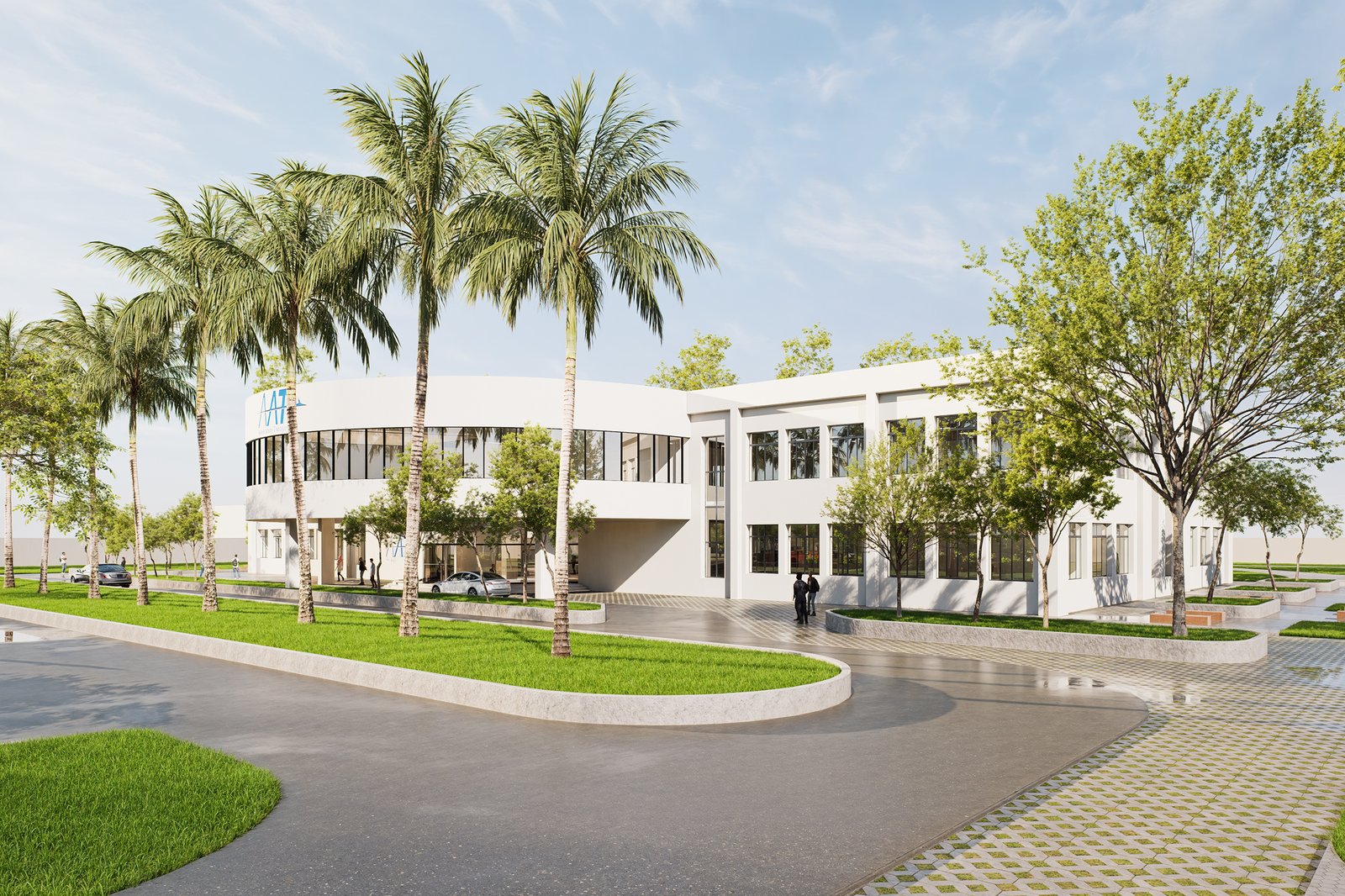
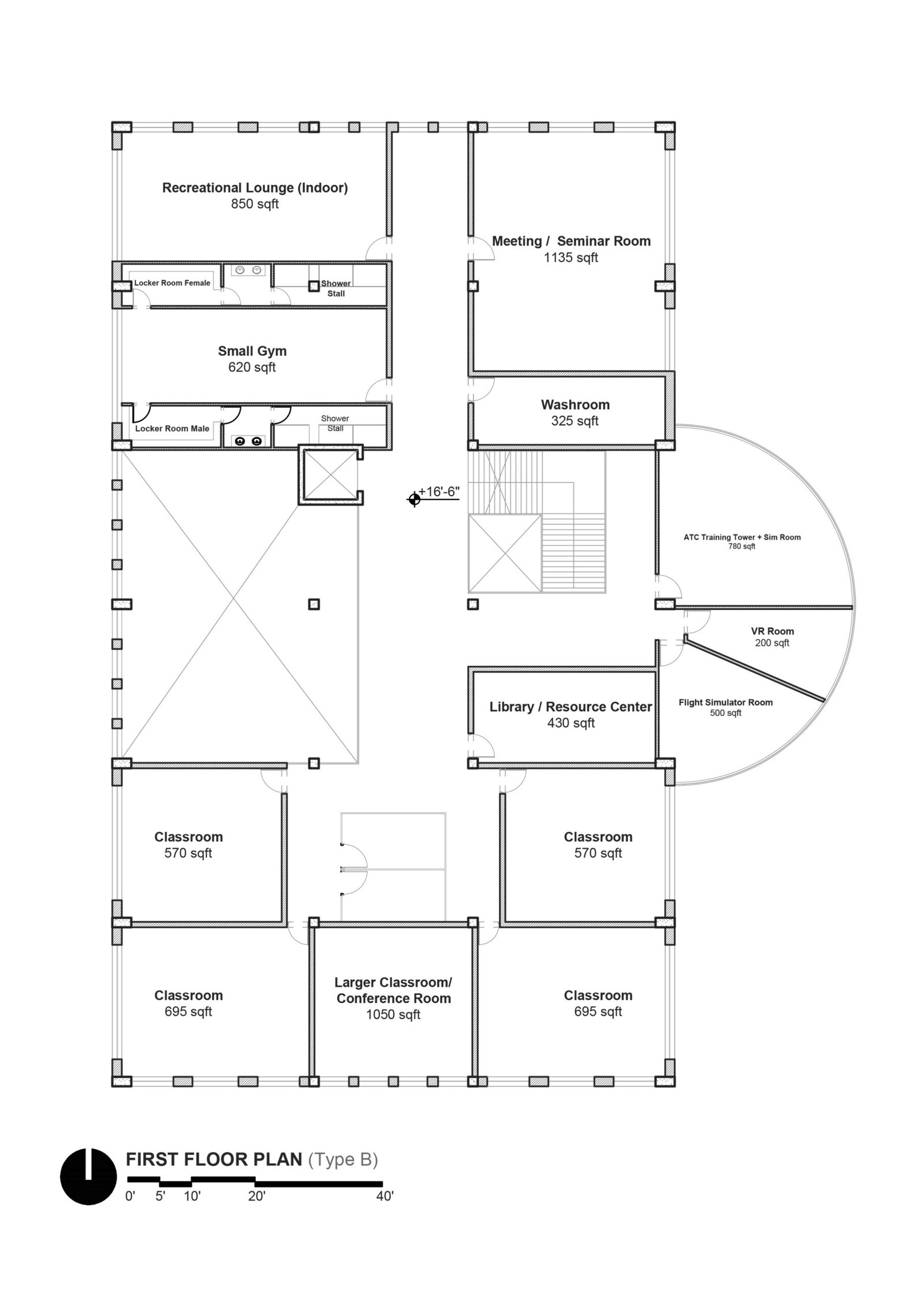
The building is organized around a distinctive curved front bay, which acts as both a visual landmark and the functional heart of the institute. This prominent volume houses the Air Traffic Control (ATC) Training Simulator and ATC briefing rooms, offering panoramic visibility, controlled lighting, and an immersive learning environment. The curved glass façade reinforces transparency, orientation, and technological sophistication while establishing a strong institutional presence.
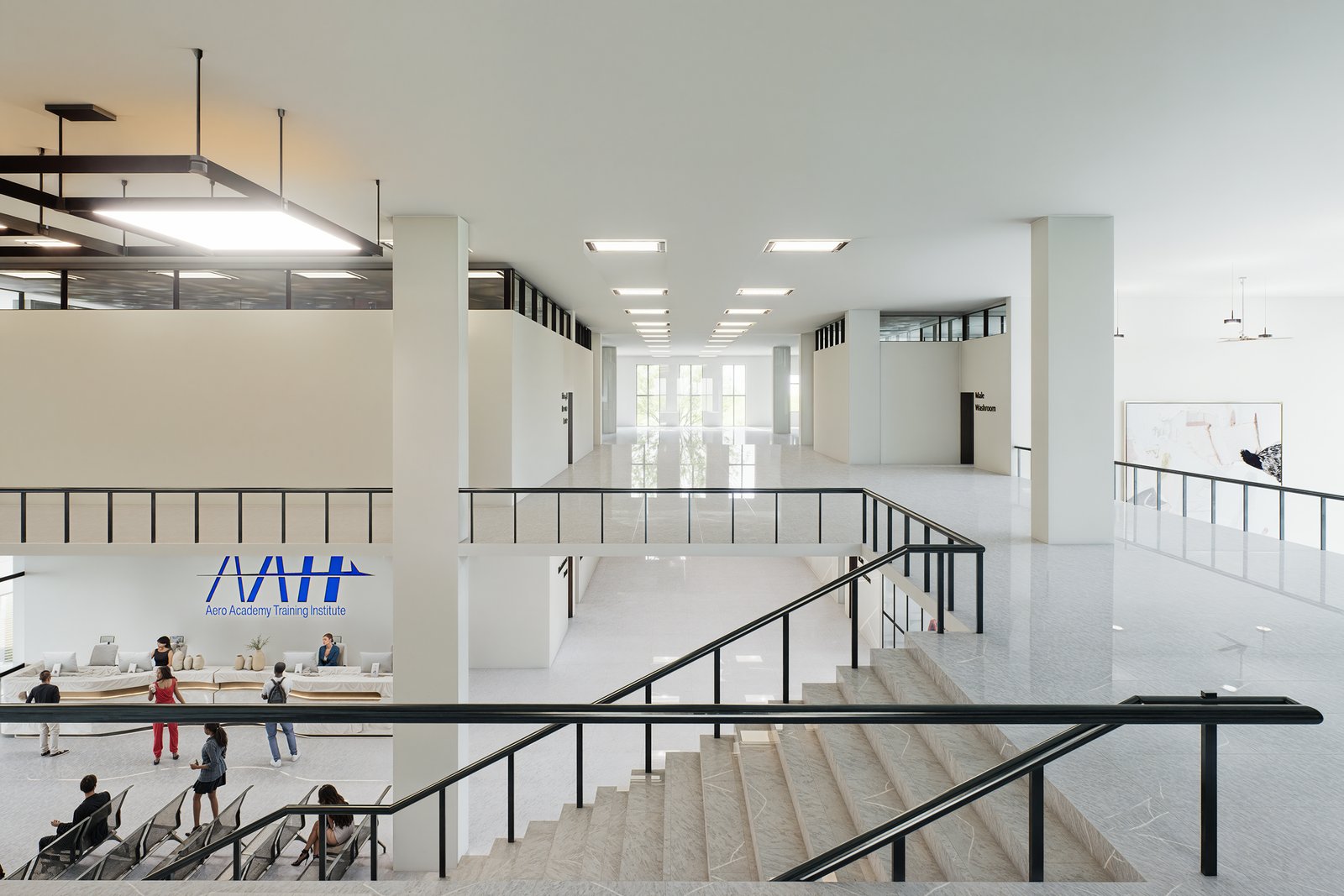
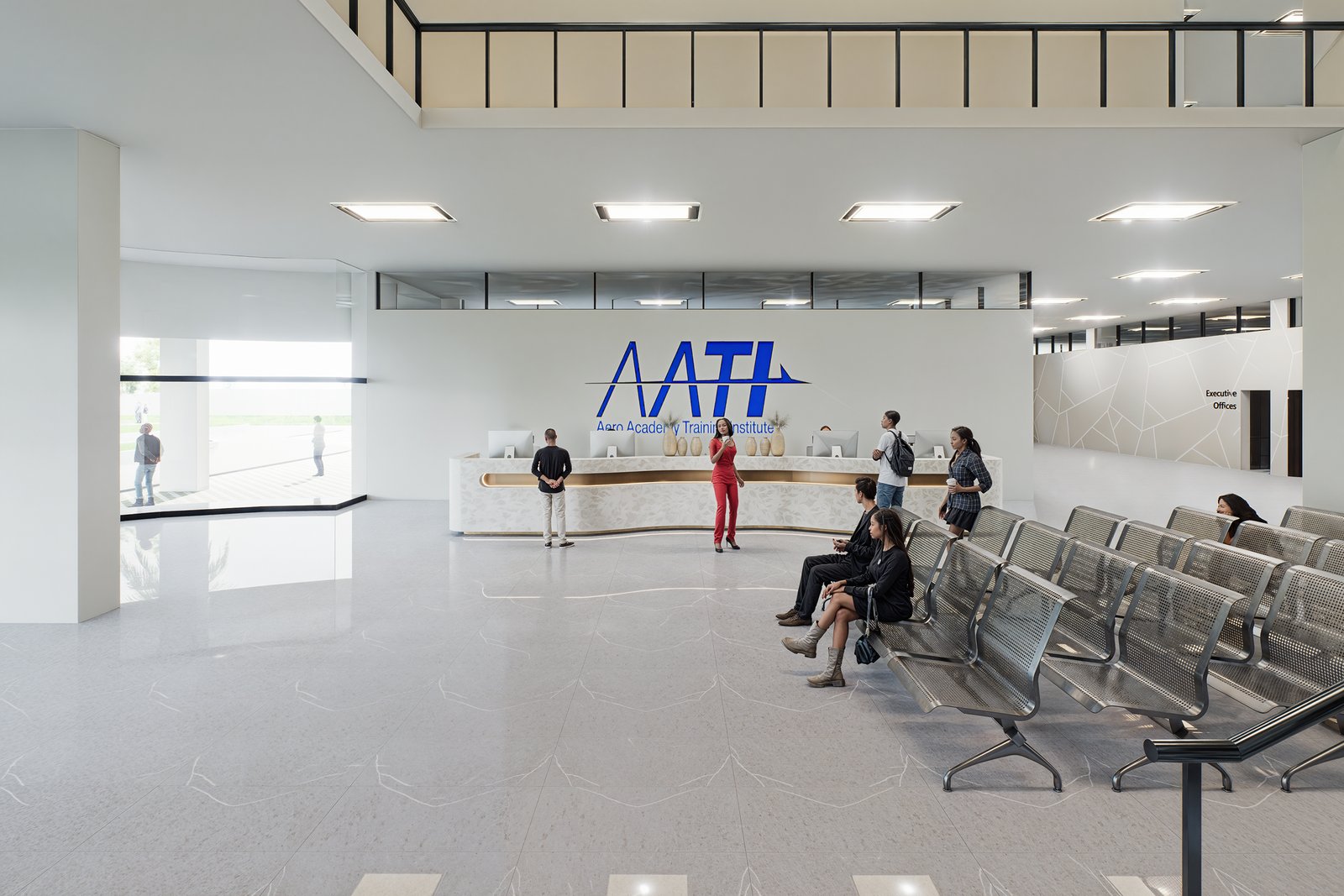
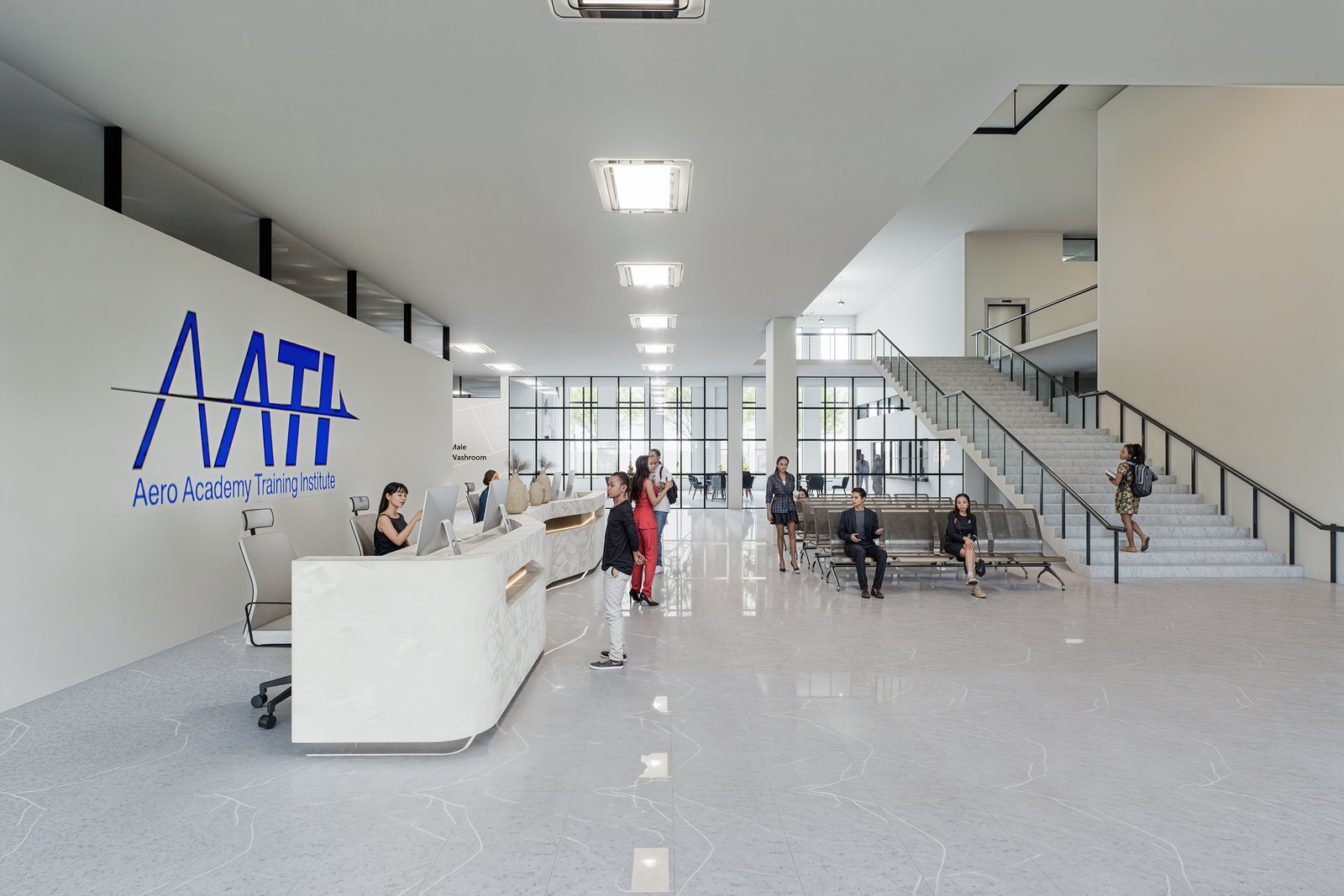
The ground floor is designed to be publicly accessible and programmatically active. It accommodates the reception atrium, student services, admissions, and executive offices, creating a clear and welcoming entry sequence. The meeting hall / auditorium, capable of seating 100–150 people, is positioned for easy access during events, orientations, stakeholder briefings, and community programs—allowing the institute to function as both an academic and civic venue. Supporting spaces such as seminar rooms, classrooms, aviation maintenance workshops, avionics labs, and aircraft component storage are carefully zoned to ensure operational efficiency and safety.
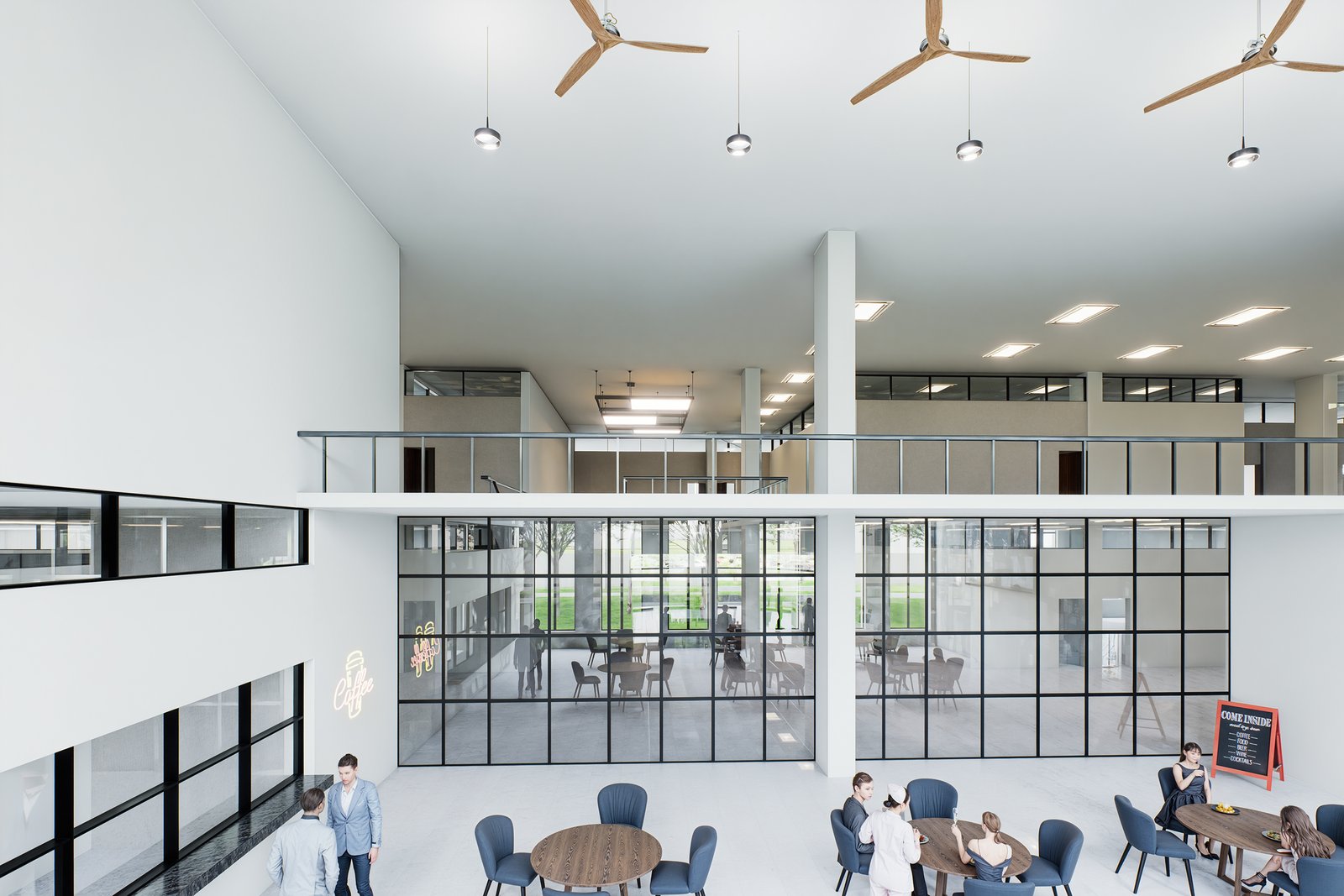
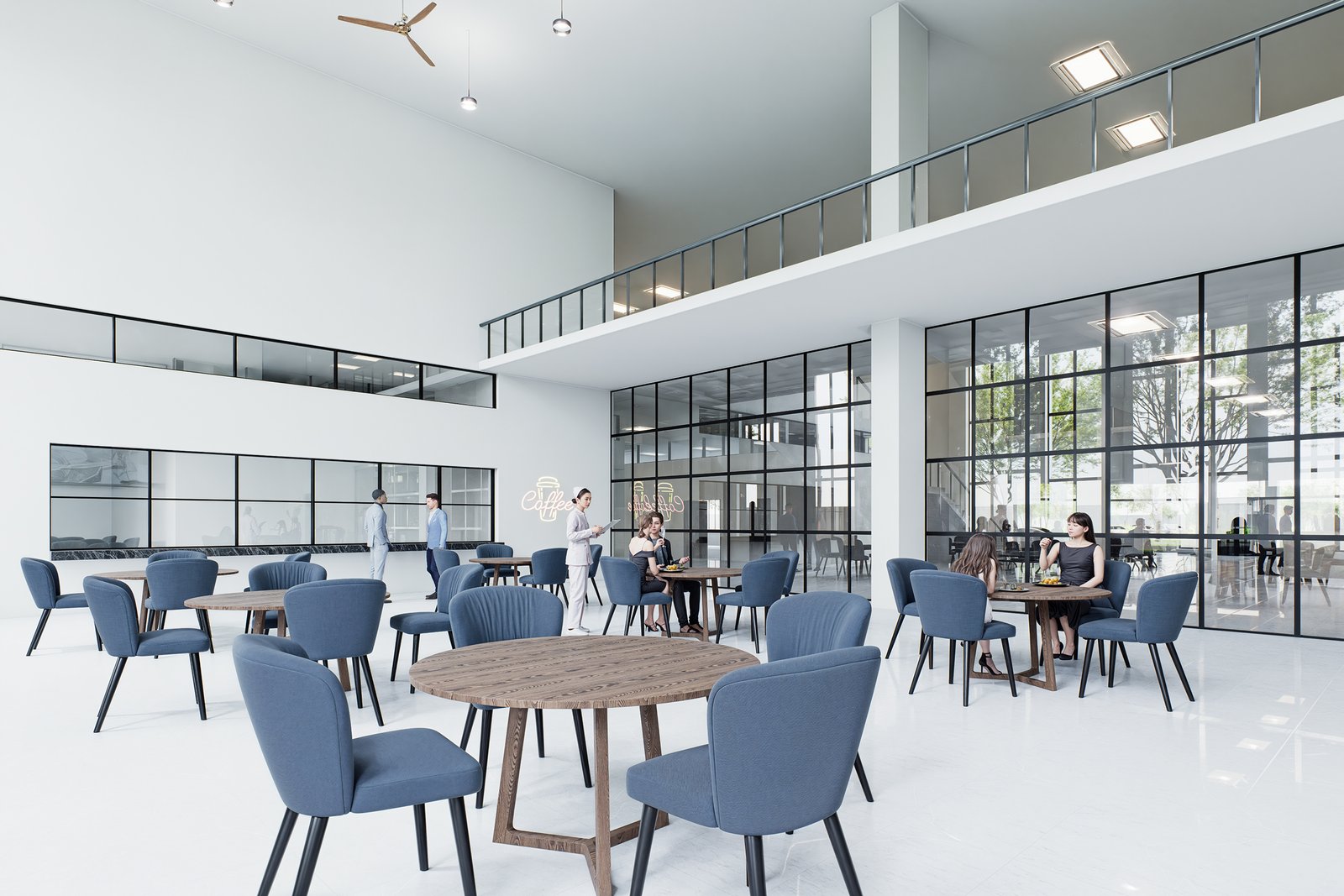
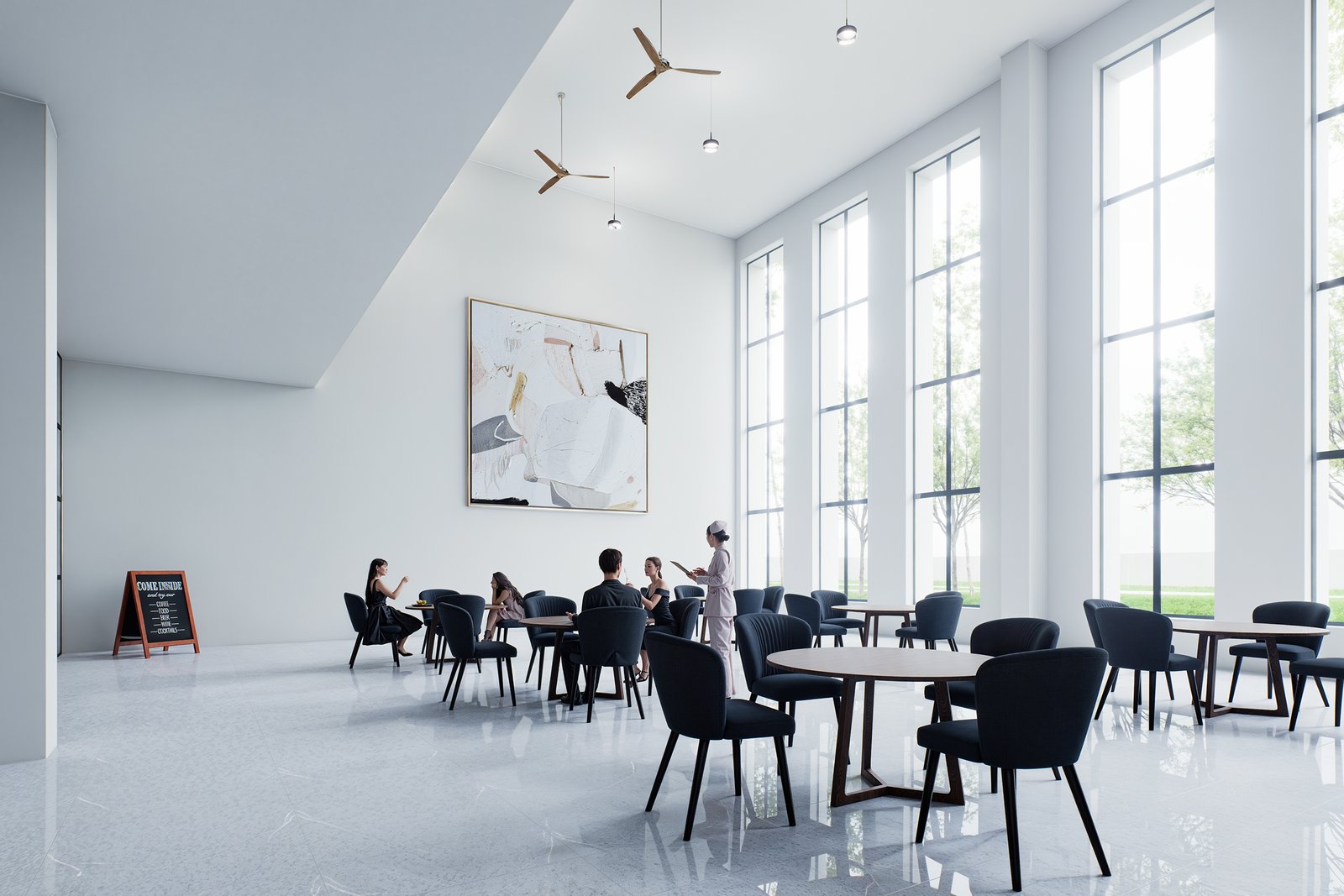
The upper floor focuses on academic concentration and specialized training. It houses classrooms, faculty offices, simulator rooms for pilots, library and resource centers, IT and server facilities, and indoor recreational lounges. Visual connections between floors, controlled circulation, and ample daylight enhance orientation and user comfort. A café and dining lounge overlooking landscaped outdoor spaces encourage informal interaction and student well-being.
Architecturally, the building adopts a clean, modern language with disciplined massing, horizontal articulation, and generous glazing. Interior spaces are defined by high ceilings, controlled acoustics, and flexible layouts to support evolving aviation technologies and training requirements. Landscaped pathways, shaded outdoor areas, and pedestrian-friendly circulation reinforce a campus-like environment.
Overall, the AATI building is conceived as a scalable, future-ready aviation training hub—one that supports professional excellence, technological advancement, and community engagement, while establishing a strong and recognizable identity for the institute.